20 Free Ways For Deciding On Floor Installation
Wiki Article
Hardwood Vs. Lvp: Which Floor Does Better For Philadelphia Homes?
If you've been getting flooring estimates in Philadelphia lately, you've probably seen that nearly every contractor brings up the same debate on hardwood or LVP? It's not a simple answer and any flooring specialist certified by the state will tell you it depends heavily on the specific room, the home, and the home owner. Philadelphia's housing market is unique: rowhomes older colonials with split-levels all across Bucks County, ranch homes in Delaware County -- and what's perfect for the one location could be an unpleasant mistake on another. This is what you need in order to understand before committing.
1. Philadelphia's Older Homes Create Subfloor Complications
Most hardwood installation guides require a clean flat subfloor. Philadelphia doesn't always cooperate. The homes constructed before 1970that covers a significant part of the city and the surrounding counties -- often have subfloor imperfections, older subfloors of board instead plywood, or moisture issues from foundations that are aging. LVP manages minor imperfections to subfloors better than solid hardwood which transmits every bump and dip beneath it. A reliable flooring specialist will be able to assess the situation before offering you the most suitable option.
2. Humidity is a real factor Here, Not just the subject of a sales pitch
The Delaware Valley sits in a humid climate zone of the continental. Dry summers, dry winters have dry conditions, but the swing is crucially important especially for hardwood that is solid. Wood expands and contracts as fluctuations in humidity. In a Philadelphia rowhome with a variable HVAC, the movement could create gaps, cupping or squeaking in the course of time. LVP has dimensional stability -- it doesn't care much about the fluctuation in humidity. This makes it an ideal choice for kitchens, basements and older homes with no climate control.
3. Hardwood Still Wins on Long-Term Home Value
If you're living in a beautiful area of Montgomery County or a historic neighborhood like Chestnut Hill and Society Hill, real hardwood flooring can still be noticed during resale. People notice it, appraisers noting it, and also the ability to sand and finish hardwood numerous times over a long period of time will give it a longevity LVP isn't able to match. The quality of LVP is impressive, but it cannot be refinished -when the wear layer has been removed this is the time to replace it.
4. LVP Installation Cost Is Consistently Lower
The Philadelphia metro area, including the City of Philadelphia Bucks County, Montgomery County, Delaware County, and South Jersey -- LVP installation typically runs cheaper cost per square foot than solid wooden. The material is lighter, cuts faster, and also the floating installation method most LVP employs is easier to install and requires less longer than nail-down wood. If budget is the main consideration and you're after the best results, LVP is where most inexpensive flooring installers in Philadelphia will direct you.
5. Nail-Down Hardwood Needs the Right Subfloor
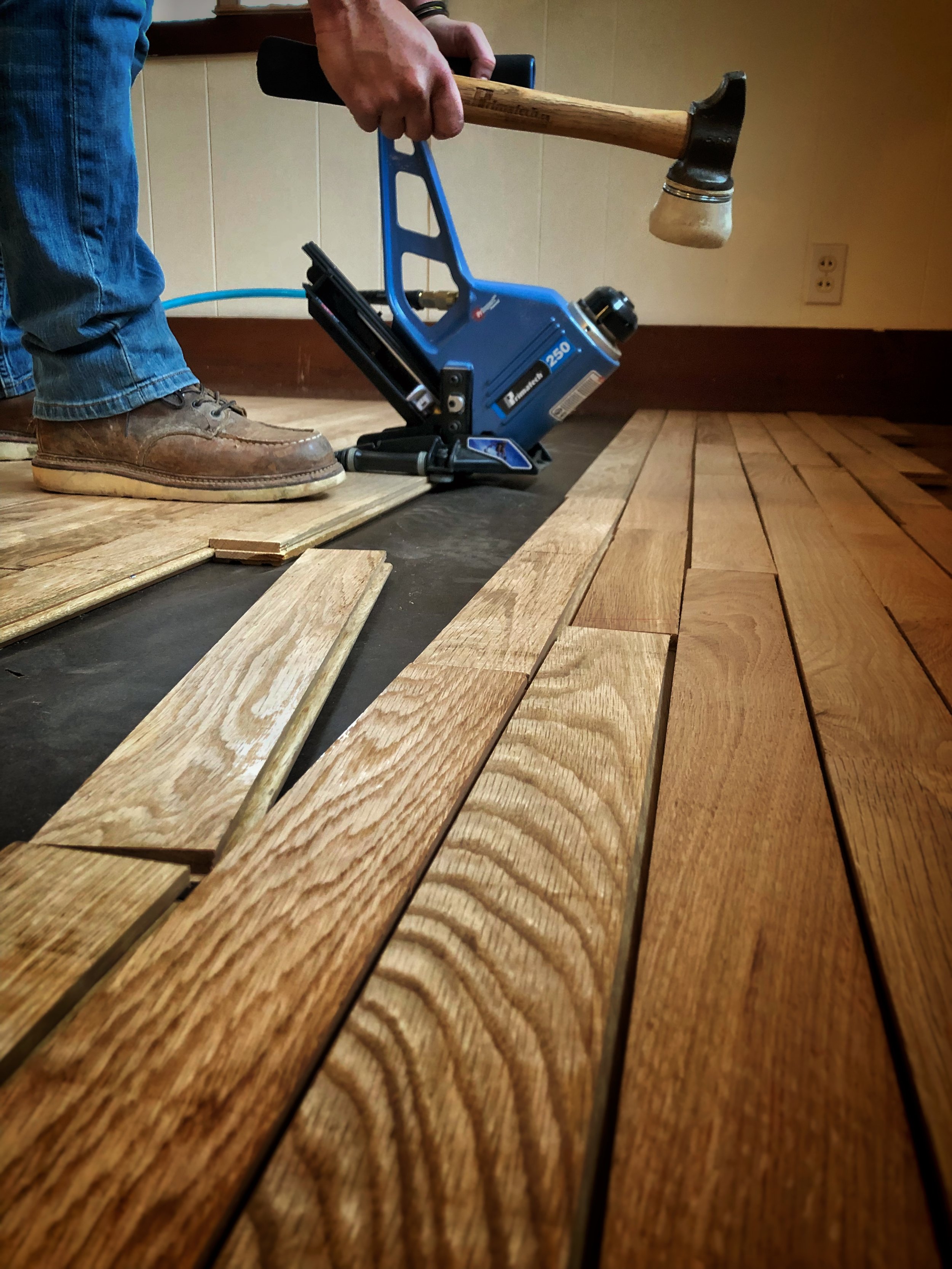
Solid hardwood installed using the nail-down installation requires a subfloor of adequate thickness -usually 3/4 inches of plywood minimum. A lot of Philadelphia houses, particularly ones with concrete slabs or older diagonal board subfloors are in need of repairs or upgrades before nail-down can be used. This is an important step to take care of within a year. Certified flooring installers will highlight the issue early; contractors with budgets usually don't.
6. LVP Is the Practical Winner on Bathrooms and Kitchens
Bathroom tile installations remain popular, but LVP has taken a real share of the kitchen and the bathroom flooring markets in Philadelphia because it's water-proof, warmer underfoot than ceramic tiles and quicker to put in. For those looking to create that wood look throughout the property, including wet areas LVP provides visual consistency that hardwood simply does not -- you're not installing solid hardwood in the bathroom.
7. Custom staining is a hardwood-only Advantage
One thing LVP can't provide is custom staining. For those who want a floor shade that is matched to your cabinets, trim or even a particular style -like a cool grey wash or a deep espresso warmer provincial toneshardwood provides you with that artistic control. Flooring professionals who are located in Philadelphia who can provide custom staining can create a unique flooring. LVP is available in pre-determined colorways. What you see inside it is actually the color you will receive.
8. Engineered Hardwood sits squarely in the Middle
It's important to mention this because a lot of homeowners fail to realize that engineered hardwood offers a real wood surface layer that has more dimensional stability than solid hardwood. It's a genuine middle way one that's more resistant to moisture than solid and more refinishable than LVP, and installable as an elongated floor in areas that nail-down isn't an option. Several flooring contractors across Bucks as well as Montgomery County are recommending it strongly right now for good reasons.
9. Inquiring for a flooring estimate free of charge We'll let you compare the two options.
Flooring companies that are reputable in Philadelphia will offer you both material side-by -side, if you ask. This is probably the most beneficial thing you could do prior to making a decision. The amount of difference for materials and labour usually astonishes homeownersthe difference can be smaller that they had hoped, sometimes it's important. In either case, you're making an informed decision, not being a guesser.
10. The most effective floor is the one that is matched to your specific Home
There is no universal winner. One 1920s rowhouse in South Philly with an uneven subfloor and no central air is an entirely different story than a colonial home in Delaware County with a slab basement. The flooring contractors who take the time to explore your space and check your subfloor ask about your household's activities children, pets traffic patterns, pets -- and then make a recommendation is the one you should be hiring. People who sell one product regardless of your needs are the ones to walk away from. See the most popular
best flooring contractors Philadelphia for website tips including solid hardwood floor installation Philadelphia, free flooring estimate Philadelphia, LVP flooring Philadelphia PA, flooring contractors Montgomery County PA, wood floor restoration Philadelphia, hardwood floor installation Philadelphia, luxury vinyl plank installation Philadelphia, cheap flooring installation Philadelphia, hardwood floor refinishing Philadelphia, flooring installers Philadelphia and more.
Tile Vs. Laminate: The Perfect Option For Philly Kitchens
The flooring of the kitchen in the Philadelphia home has more importance than any other room because kitchens here put in a lot of effort. Rowhome kitchens, which double as social hubs galley kitchens, older houses that endure constant use by pedestrians, open-plan kitchens with renovated Delaware County colonials -- they all face the same core challenges: dropping things, water, grease, and years of usage. Both laminate and tile show often in flooring estimates throughout the Philadelphia metro area, and both have genuine arguments in their favor. But they are not interchangeable, and choosing the wrong choice for a kitchen area is evident faster than be in any other area of the house. Here's how the distinction actually breaks down.
1. Water Resistance is the 1st Filter, and Tile Wins It With a Cleaner Method
Kitchens get wet. Sinks leak, dishwashers leak glasses can be smashed over, and the mop and mop water sits longer that it should. Ceramic tile and porcelain have a 99% resistance to water at the surface -- the risk, if any is located in the grout. It is fixable by a proper sealing. Laminate is made of wood fiber that absorbs moisture as soon as it is placed beneath the surface layer. In the kitchen, it will eventually. If the laminate expands along edges or at seams, the damage is irreparable and the floor will require replacement. Installing waterproof flooring in a Philadelphia kitchen is a reasonable idea, but the flooring does not provide the requirements.
2. Laminate has a lower entry Cost but a Shorter Kitchen Lifespan
This is where laminate makes its strongest case. The installation of laminate flooring in Philadelphia kitchens usually is cheaper than tile -- lower costs for materials, speedier labor, and without the need for grout or mortar. For homeowners with a tight budget who need an attractive kitchen floor that looks great now, laminate flooring is attractive. The real issue is its life. Tile that is installed correctly in a Philadelphia kitchen could last for 20 to 30 years without major intervention. Laminates within the kitchen, and exposed to the moist conditions that kitchens bring, often will begin to show signs of damage in 5 to 10 years.
3. Porcelain trumps ceramic in high-traffic Kitchen Conditions
Not all tiles are created equal in a kitchen context. Porcelain is denser, harder, and less porous than ceramic. It is capable of handling cast iron pans falling off and chair legs, along with regular foot traffic with ease over time. Ceramic flooring tiles are a good choice for kitchens especially in areas with less traffic or where cost is a controlling factor however, the difference in density affects a room that will take the same punishment as a kitchen. Philadelphia flooring contractors who do large amounts of kitchen tiles installation will typically push the choice of porcelain, unless cost is the primary consideration.
4. Laminate Comfort Underfoot is a real benefit
This doesn't get enough credit in the tile vs. laminate debate. Tile is hard and cold -- standing on it for an extended cooking session can be more exhausting than standing on the laminate floor, which has a slight cushioning and is more comfortable underfoot. In a Philadelphia rowhome, where the kitchen floor is situated in a basement without insulation, ceramic tile during winter is extremely uncomfortable without radiant heat underneath. Laminate won't fix every kitchen flooring problem but it will solve this issue and for those who do a lot of standing in their kitchens, it's a meaningful quality-of-life factor.
5. Grout Maintenance is the Honest downfall of Tile
Tile is the best for durability and water resistance, but grout is a problem. When grout is not sealed, or has a long-lasting age, it in a kitchen absorbs grease, staining, and even bacteria. To keep kitchen tile floors looking clean calls for grout sealing at installation, and resealing periodically over long periods of time. Philadelphia tile flooring contractors who know this in advance are doing you an favor. People who decide to install tile hoping for zero maintenance are often the ones who are left with grey grout lines which were previously white.
6. Large Format Tiles alter The Kitchen Look and Subfloor requirements.
Large porcelain tiles -- larger than 24x24 have become increasingly popular in Philadelphia kitchen renovations and they appear stunning when placed in the right space. The real issue is that large format tile is most demanding of subfloor flatness and flatness than small tiles. Subfloor irregularities will show as lippage edges that are at different heights. This can be both a visual issue and a hazard to walk on. Repair of the subfloor prior the installation of tiles in Philadelphia kitchens is typically required with a price that does not appear in a materials-only estimate.
7. Laminates Cannot be Refinished Once It Wears
Flooring for kitchens made of hardwood -which isn't as popular but not unheard of -- is refinished and sanded whenever the surface has wear. Tiles are able to have individual cracks tiles replaced. Laminate does not provide a choice. When the wear layer on the laminate deteriorates, which will faster in a kitchen and bedroom, the flooring must be replaced. For homeowners who are planning to remain in their Philadelphia home for more than 15 years, the inability of laminate to repair itself is a serious long-term expense that the lower upfront price doesn't always cover.
8. LVP is the third option Both studies keep pointing to
It's important to name it clearly the difference between luxury and regular vinyl planks. It's water-proof like tile, warmer and more comfortable in the foot than laminate, and it is more resistant to kitchen use both in the particular combination of foot traffic and moisture. LVP flooring installation in Philadelphia kitchens is increasing significantly as it helps to resolve the core tension between the two options that most homeowners are comparing. This isn't the right choice for every kitchen but it's a reason that the tile against. laminate debate often ends in a flooring consultant recommending a third option.
9. The time to install a system varies significantly between the Two
Laminate flooring is installed in kitchens speedily. A small to medium-sized kitchen can usually be completed in a day. Installation of tiles can take longer as mortar setting time the grout curing process, the accuracy required for layout and cuts adds to. For Philadelphia homeowners that need to get their functioning kitchen, laminate has a practical timing advantage. For those making a large-scale kitchen remodeling which has already prolonged, tile's installation requirements are less important to consider.
10. The Kitchen's Subfloor's Existing Flooring Should Make the Final Call
More than aesthetics in addition to budget and much more than your personal style The condition and type of subfloor within your particular Philadelphia kitchen should be the primary factor in which material you choose. A solid and flat plywood subfloor opens up all options including large format tiles. A subfloor that was built in the past might require an overlay prior to tile becoming possible, and this adds cost that shifts the budget comparison. A concrete slab beneath grade alters the discussion about moisture completely. The top flooring experts in Philadelphia will inspect the kitchen subfloor first. They will allow that assessment to inform the choice rather than following what they're currently storing in the warehouse. Follow the most popular See the most popular laminate flooring installation Philadelphia for website recommendations including wood floor restoration Philadelphia, affordable flooring installation Philadelphia, subfloor repair Philadelphia, free flooring estimate Philadelphia, porcelain tile installation Philadelphia, waterproof flooring installation Philadelphia, flooring contractors Bucks County, porcelain tile installation Philadelphia, subfloor repair Philadelphia, flooring installation Philadelphia and more.
